Mobile kitchen trailer rentals in Chino, California.
Mobile kitchen trailers are available for lease in Chino for event vendors, restaurant operators, schools, and construction teams. A CHINO Days caterer may need a dedicated production base, while a Central Avenue kitchen refit requires temporary cooking through an indoor closure. We help plan a commercial kitchen trailer around the service you need to maintain and a suitable receiving property. Rentals include 24/7 support and emergency deployment coordination for unexpected interruptions, plus mobile dishwashing and refrigeration facilities to support the temporary kitchen.
Explore Chino kitchen projects ↓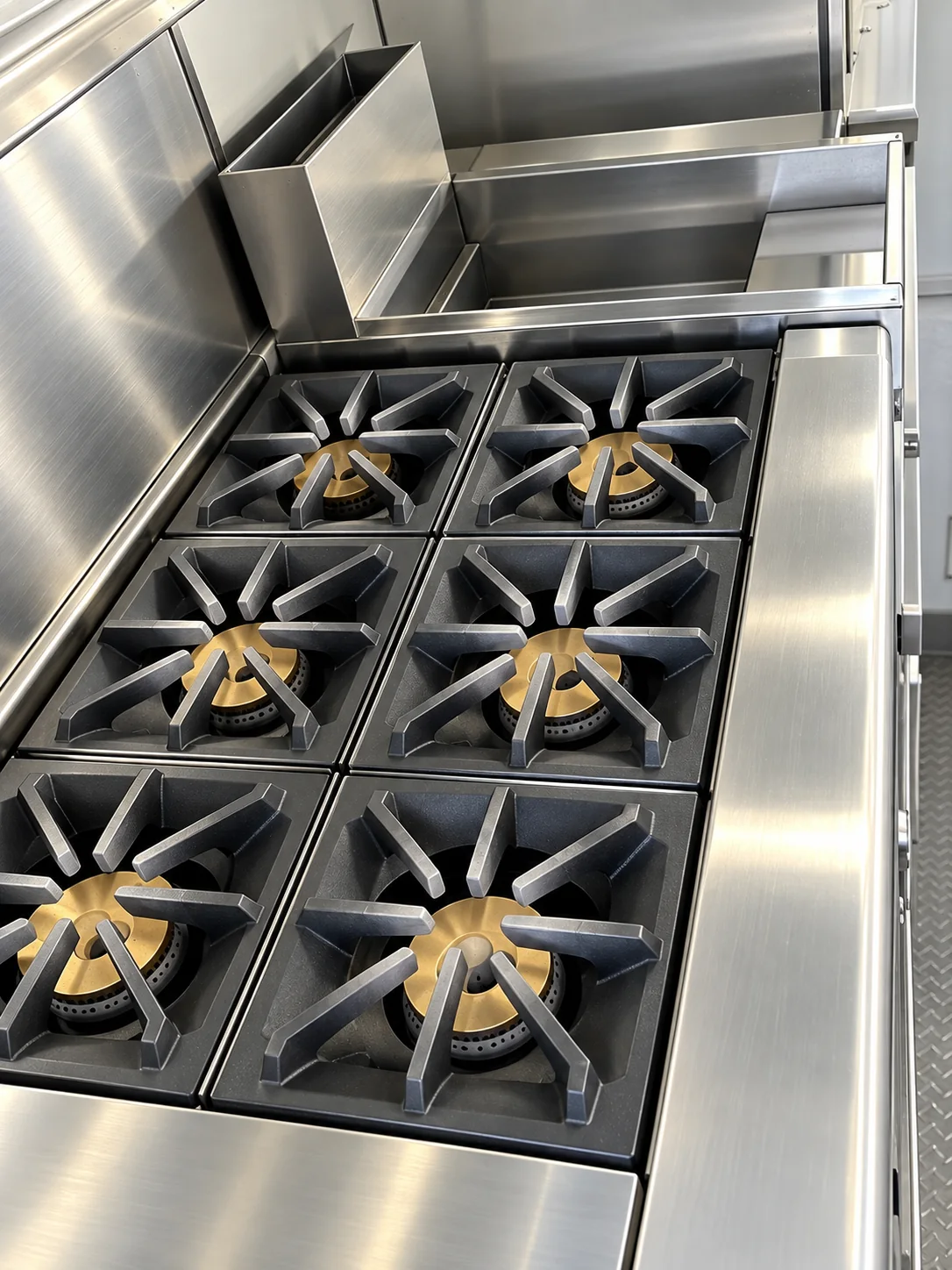
- Kitchen equipment pricing
- Starting at $6,390/month · 24 ft
- Delivery planning
- Delivery schedule confirmed in your quote
A kitchen plan for Chino.
Start with cooking capacity, then connect the supporting facilities needed for your site in San Bernardino County.
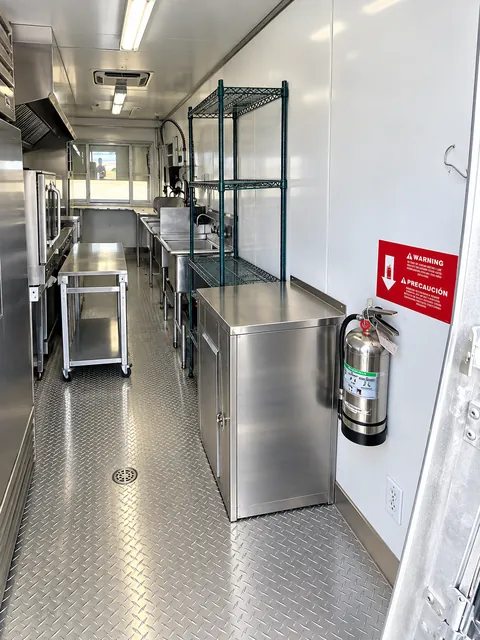
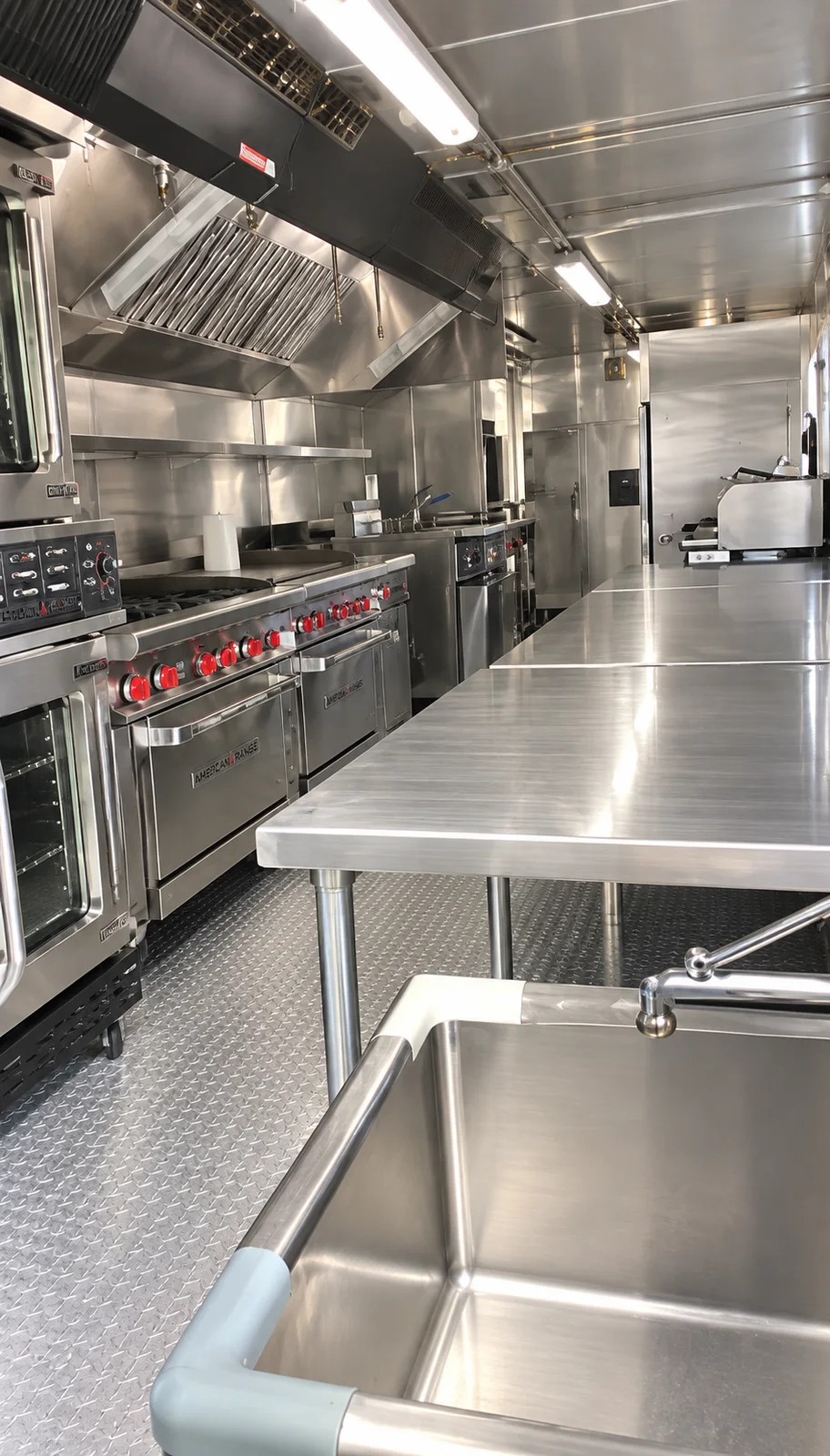
24ft Mobile Kitchen Trailer
A compact cooking trailer with a convection oven, griddle, six-burner range, sinks, and reach-in cold storage for restaurant renovations and temporary meal service.
View model details ↗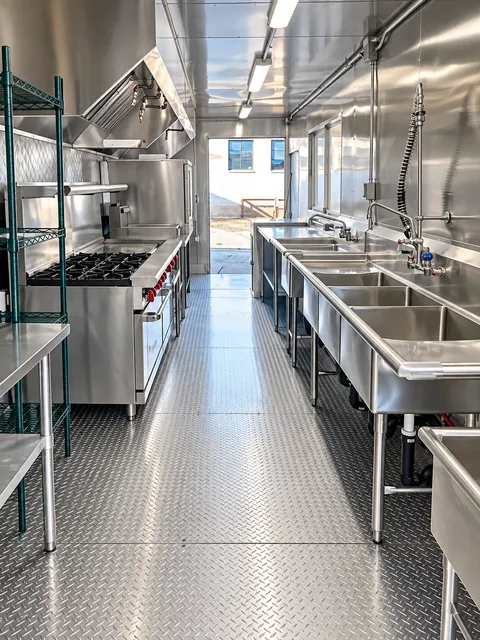
28ft Mobile Kitchen Trailer
A 28ft cooking layout with a convection oven, griddle/oven combination, six-burner range, preparation space, sinks, and reach-in cold storage for ongoing meal operations.
View model details ↗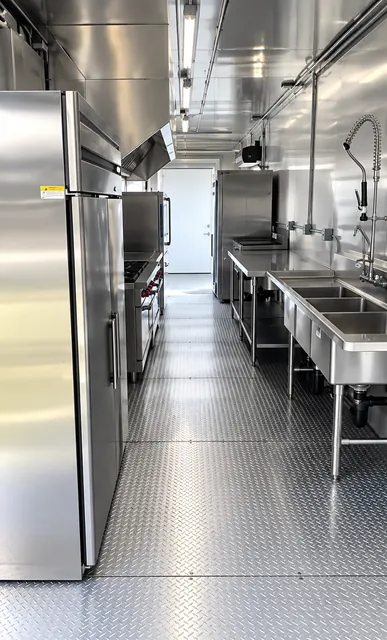
38ft Mobile Kitchen Trailer
A longer commercial kitchen configuration with a fryer, convection oven, griddle/oven, six-burner range/oven, sinks, and reach-in refrigeration and freezer storage.
View model details ↗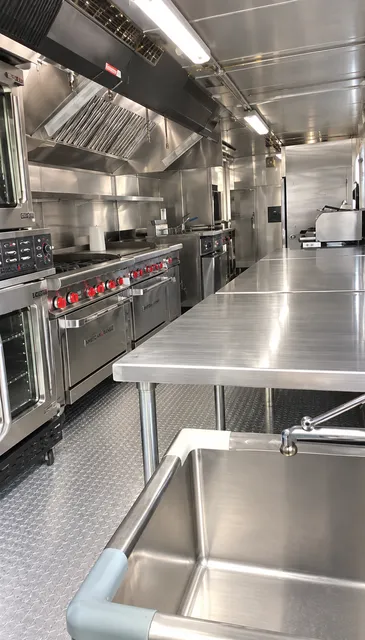
40ft Mobile Kitchen Trailer
A 40ft cooking configuration with a double-stack convection oven, fryer, tilting skillet, griddle/oven, six-burner range/oven, sinks, and reach-in cold storage for temporary meal production.
View model details ↗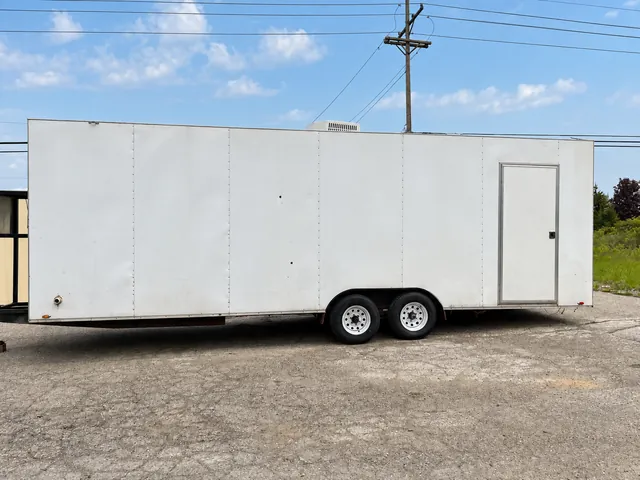
22–26ft Low-Temp Dishwashing Trailer
Low-temperature push-through dishwashing trailers in 22ft, 24ft, and 26ft configurations, with a soil tray, scraping table, three-compartment sink, and handwashing sink.
View model details ↗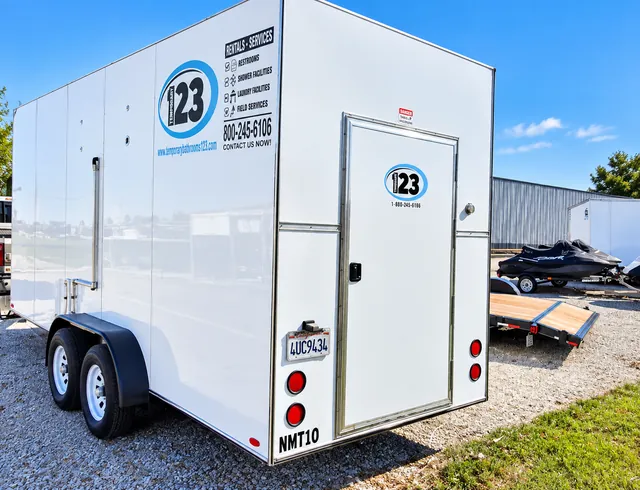
20ft Refrigerated Trailer
A 20ft refrigerated trailer for temporary stock storage, with separate temperature configurations to match the food or goods being held.
View model details ↗Compare kitchen trailer specifications.
Review all 9 kitchen configurations for your Chino project. Select a model for its full specifications, photographs, and rental details.
Scroll across the table to compare specifications.
| Kitchen model | Cooking & preparation | Cold storage | Power example |
|---|---|---|---|
| 24ft Mobile Kitchen Trailer | Convection oven, griddle/oven, 6-burner range/oven | Reach-in refrigerator + freezer | 220V, single-phase, 200A |
| 26ft Baby Bulk Kitchen Trailer | Cooking stations, preparation area and sinks; appliance package by quote | Reach-in refrigerator + freezer | 220V, single-phase, 200A |
| 28ft Mobile Kitchen Trailer | Convection oven, griddle/oven, 6-burner range/oven | Reach-in refrigerator + freezer | 220V, single-phase, 200A |
| 38ft Mobile Kitchen Trailer | Fryer, convection oven, griddle/oven, range/oven | Reach-in refrigerator + freezer | 220V, single-phase, 200–220A |
| 40ft Mobile Kitchen Trailer | Double-stack convection oven, skillet, fryer, range/griddle | Reach-in refrigerator + freezer | 220V, single-phase, 200–220A |
| 40ft Mobile Combo Kitchen Trailer | Convection oven, fryers, range/griddle | Walk-in cooler + reach-in refrigerator/freezer | 220V, single-phase, 200–220A |
| 40ft Bulk Kitchen Trailer | Stacked convection ovens, skillet, fryer, range/griddle | Walk-in cooler + reach-in refrigerator/freezer | 220V, single-phase, 200–220A |
| 40ft Bulk Combo Kitchen Trailer | Oven bank, skillet, fryer, range/griddle | Walk-in cooler + reach-in refrigerator/freezer | 220V, single-phase, 200–220A |
| 38ft All-Electric Kitchen Trailer | All-electric kitchen; appliance package by quote | Confirm storage package | Confirm unit load schedule |
Configuration examples shown. Confirm the assigned unit’s equipment and connections in your quote.
CHINO Days community celebration
The City lists CHINO Days among its special events and invites vendors to take part in community programs. When a festival occupies a park or civic space, food operators need to coordinate event hours, vendor access, crowd flow, and the planned service footprint.
A mobile kitchen trailer can give a caterer a dedicated cooking base near an approved serving point. Check the event status and permit rules, then coordinate site access, equipment clearances, utilities, refrigeration, and sanitation with the organizer. For Chino events, reserve the trailer parking and loading zone before vendors arrive. Keep stock deliveries, public lines, and dish returns on separate paths, and name the person who can authorize utility changes or a weather-related pause. A brief walk-through also checks slopes, gate widths, and turning room before dispatch.
Local background sources
Euclid Avenue and capital project contractor support
Chino’s construction portal tracks capital work and highlights projects such as Elevate Euclid, Pine Avenue widening, pavement improvements, and water infrastructure. Work zones can change delivery routes and staging space for local contractors.
A portable kitchen trailer can give a crew a dedicated meal location outside the active work area. Coordinate site access, posted closures, utilities, sanitation, and break timing with the project manager so meals do not interfere with equipment movement. For Chino job sites, reserve a meal and delivery area outside lifts, equipment routes, public paths, and contractor parking. Confirm the trailer's utilities and operating hours with the superintendent, then revisit placement when the construction boundary moves. Daily coordination can keep meal breaks from overlapping with deliveries and inspections.
Local background sources
Compare kitchen sizes.
Monthly starting rates for mobile kitchen trailers and supporting facilities in Chino. Review the equipment details and project requirements with our team.
| Kitchen length | Starting monthly rate | Configuration |
|---|---|---|
| 24 ft | Starting at $6,390 / month | Review kitchen options ↗ |
| 26 ft | Starting at $6,590 / month | Review kitchen options ↗ |
| 28 ft | Starting at $6,790 / month | Review kitchen options ↗ |
| 38 ft | Starting at $7,790 / month | Review kitchen options ↗ |
| 40 ft | Starting at $7,990 / month | Review kitchen options ↗ |
Supporting facility monthly prices
| Facility | Size | Starting monthly rate |
|---|---|---|
| Refrigeration trailer | 20 ft | Starting at $1,495 / month |
| Refrigerated container | 40 ft | Starting at $2,499 / month |
| Low-temperature dishwashing unit | 28 ft | Starting at $3,995 / month |
| Low-temperature dishwashing unit | 30 ft | Starting at $6,995 / month |
| Low-temperature dishwashing unit | 40 ft | Starting at $7,995 / month |
| High-temperature dishwashing unit | 30 ft | Starting at $9,995 / month |
| High-temperature dishwashing unit | 40 ft | Starting at $10,995 / month |
Prices, availability, delivery timing, and equipment details are subject to change and will be confirmed in your final quote.
Need help now? Call 888 385 6418 for 24/7 support and current availability.
Recreation-property maintenance & cooking-space changes
Diamond Bar’s recreation department operates community facilities and local programs. When a confirmed kitchen or service-space changeover affects a recreation program, a commercial kitchen trailer can provide interim cooking at suitable authorized property. The operator can retain selected meals while the permanent preparation area is renewed, with food production shaped around the remaining program schedule and the location where participants will receive the continued service during that work.
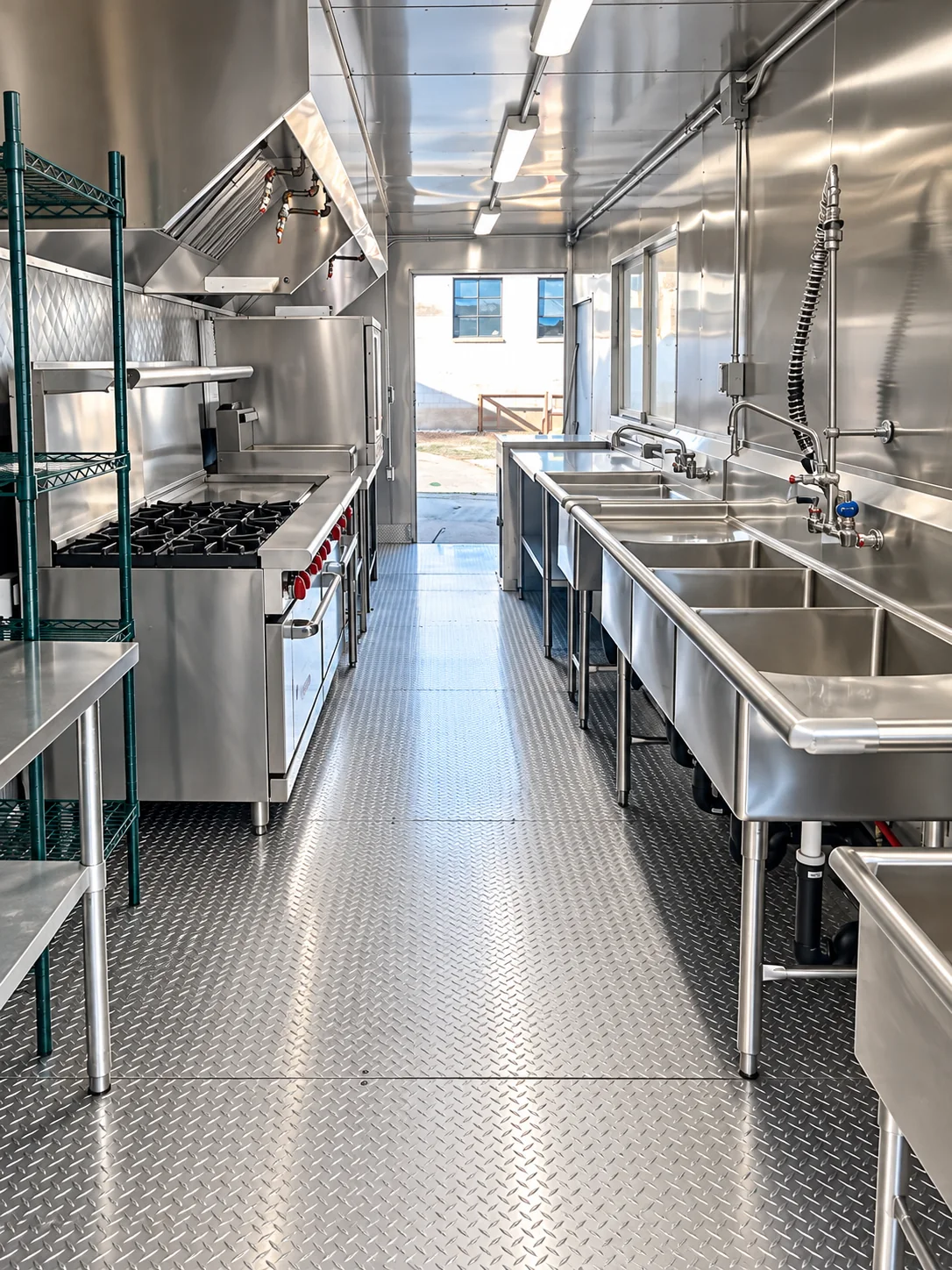
Community Center kitchen damage & relocated catering
Yorba Linda's Community Center offers banquet rooms with preparation kitchens and adjoining patios. If an unexpected leak removes one kitchen from use, a booked caterer may need another production arrangement even when the gathering itself can proceed. An emergency kitchen trailer could supply cooking at an approved location, with the venue manager determining which rooms, entrances and event activities remain suitable during the repair.
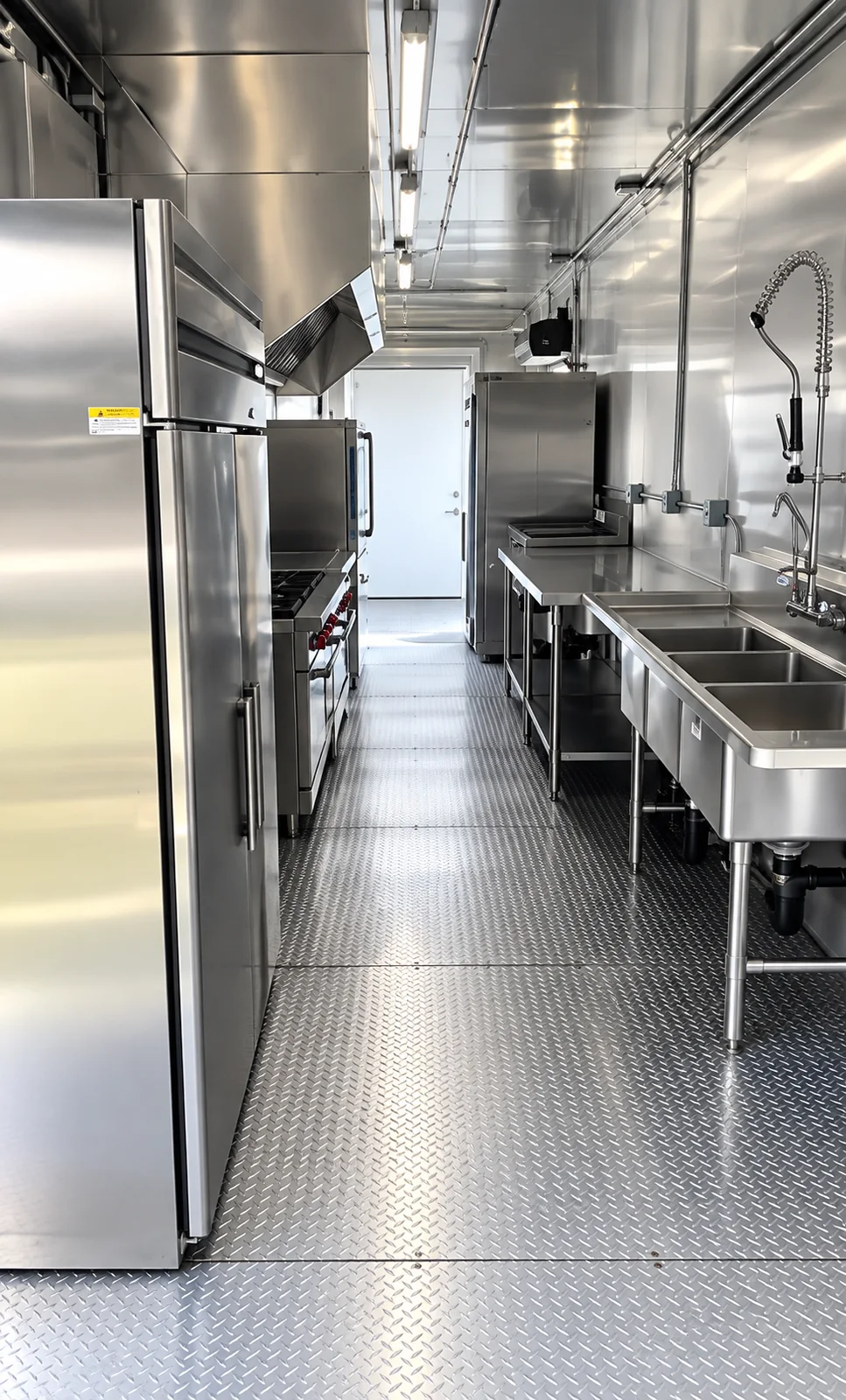
Neighborhood emergency feeding at an authorized site
Placentia's emergency preparedness page directs residents and organizations toward disaster planning resources for home, school and work. If an incident leaves households without usable cooking space, an authorized community organization may need to prepare meals beyond its usual activity. A remote kitchen facility could provide that production point after the receiving site, access and utility arrangements have been confirmed, allowing food preparation to operate separately from assistance registration and supply distribution.
Responder and public-works meal staging
Fontana coordinates with regional partners through its emergency-management system, while Public Works crews maintain streets, drains, parks, and facilities. Extended shifts can make meals at a designated base more practical than repeated trips.
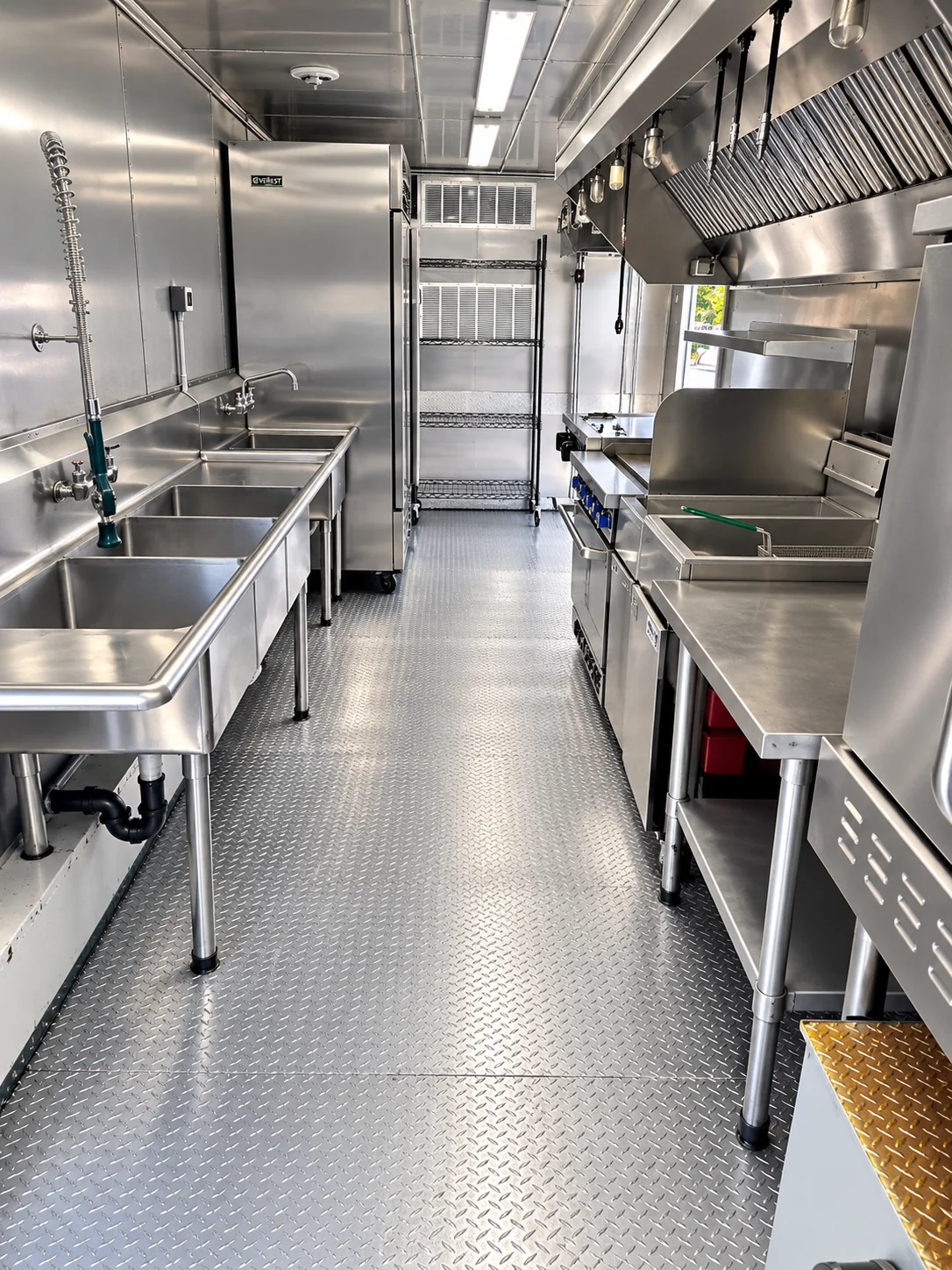
School food-service upgrades & a staged move
Villa Park's local campuses support a daily school routine that does not disappear when a kitchen needs planned work. If a district-approved food-service upgrade overlaps with programs requiring meals, a modular kitchen trailer could provide temporary cooking at a suitable location. The district would determine which tasks move and how the temporary production connects with the cafeteria or another approved serving point.
Storm or power disruption at a meal-serving facility
A storm or utility failure can affect kitchen equipment and access roads, making it difficult for an organization to serve meals from its regular site. The host should identify a backup location and a responsible person to monitor local updates.
A mobile kitchen trailer can provide an alternate cooking workspace after the site is confirmed safe and allowed for food preparation. Confirm power, potable water, refrigeration, handwashing, delivery routes, and how meals will reach the intended recipients. Before using an alternate Chino site, confirm that the building and surrounding access are cleared for staff, deliveries, and food preparation. Assign one person to follow official updates and communicate any change to the meal schedule or pickup location. Food safety and responder access remain the first checks at every temporary meal location.
Local background sources
Restaurant upgrades near Central Avenue
A restaurant or food business may renovate its kitchen while the surrounding Chino commercial area remains in service. Operators can plan a reduced menu or temporary closure around building permits, inspections, and the contractor’s sequence.
A mobile kitchen trailer can support temporary production if the property owner and food-safety authorities approve the setup. Confirm utilities, cold storage, handwashing, dishwashing, staff entry, and customer pickup before restarting service. Before Chino renovation work begins, agree on a limited menu, inspection milestones, and the date the permanent line can safely return. Keep temporary food storage separate from dust and tools, and coordinate staff access with each construction phase. Set review points so the temporary menu and service hours follow the actual work sequence.
Local background sources
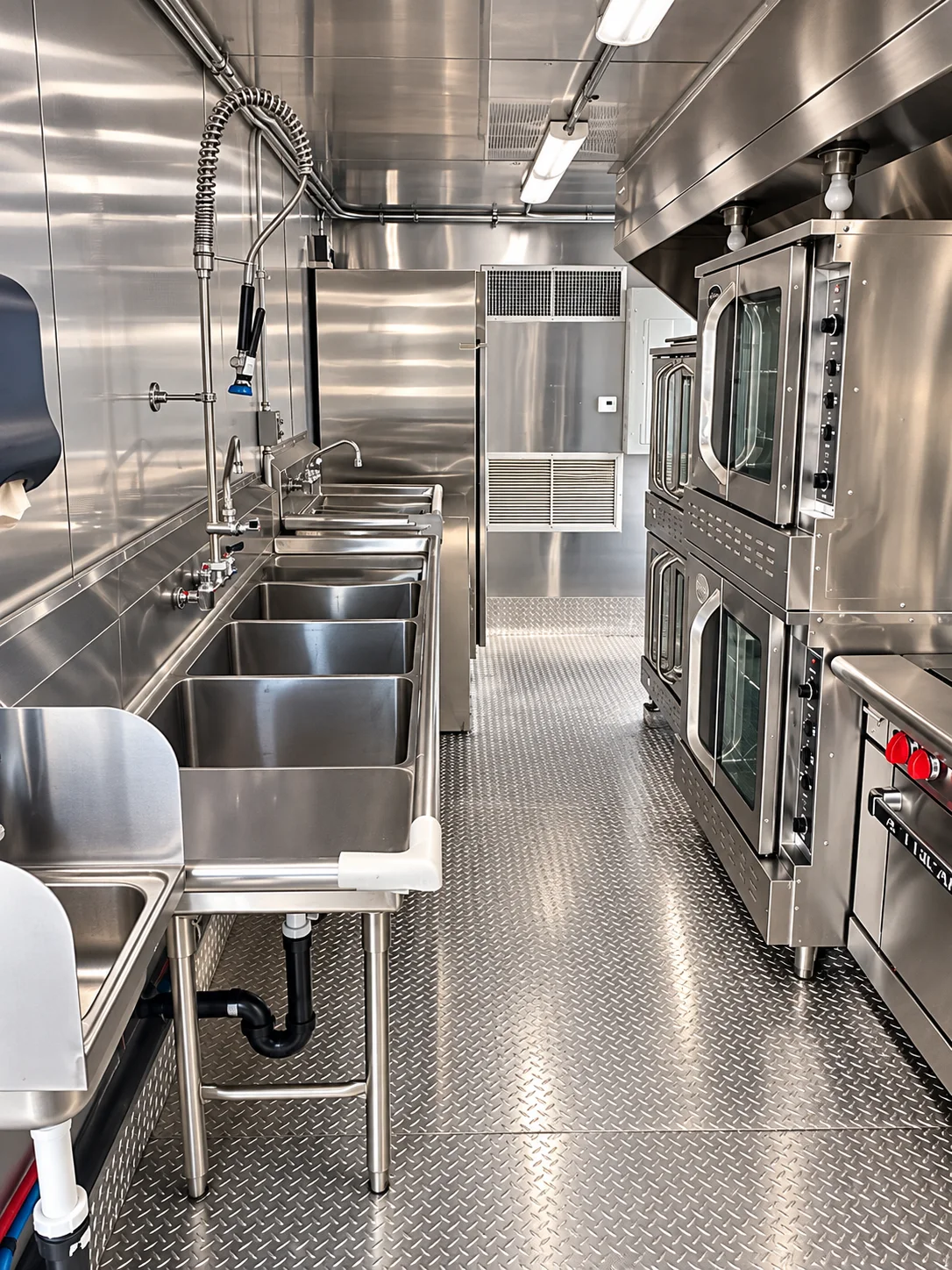
Current development projects and site work
A project such as “Current development projects and site work” at Upland development sites may limit access to the usual staff kitchen or break room while contractors and facility users share the site. A separate meal base gives the project team a reliable place to take breaks without adding food preparation to the work area.
Storm recovery & interrupted community kitchens
Claremont’s hazard-mitigation plan addresses threats to residents, businesses, and public facilities. A community meal operator affected by storm damage can consider a remote kitchen facility while its permanent space is repaired. Cooking can move to an authorized property with usable access, allowing the team to retain selected services without sharing a damaged interior with inspection, drying, and repair activities that need room to proceed.
Power outage and essential-facility service
Corona’s emergency guidance includes power-outage planning and ways for residents and businesses to receive local emergency notifications. If an incident interrupts normal operations, a designated support location may need a reliable meal plan for residents or field personnel. A portable kitchen trailer can add cooking capacity after responders verify access and authorize the service area.
Meals for crews restoring roads and public services
Following a local emergency, public works and utility crews may work extended shifts to restore streets and services. A planned meal point can support workers while keeping them near their assignments and out of restricted areas.
An emergency kitchen trailer can serve meals at an authorized staging base with a clear access route. Coordinate the crew count, rotating breaks, supply deliveries, water and power, temperature control, and cleanup with the incident or project lead. At a Chino recovery site, coordinate meal windows with the people managing road access and field work. Keep ingredient deliveries separate from cleanup traffic, provide a clear pickup route, and reassess capacity as crews or residents arrive. Clear instructions help volunteers, contractors, and guests reach the approved pickup point.
Local background sources
Fireworks Spectacular at Ruben S. Ayala Park
Chino’s Fireworks Spectacular uses Ruben S. Ayala Park and includes a food court, games, and other community activities. Vendors need to prepare around a mapped site, event schedule, and safety restrictions for the park.
A portable kitchen trailer can support hot-food production when its placement is approved by the event manager. Plan for park access windows, fire rules, service queues, power and water, cold holding, and waste handling before bringing the unit on site. For Chino gatherings, put equipment placement, fire clearance, approved hookups, and vendor load-in cutoff on one event plan. Stagger food restocking, keep guests out of the cooking lane, and assign cleanup and waste removal before opening. Match the serving window to the program schedule and keep an alternate plan for delayed setup.
Local background sources
Plan around the Chino address.
A project in Chino starts with the same practical questions: which functions need to remain available, how the trailer can reach its placement, and how utilities will connect.
- Scope the need
Map which kitchen functions are offline in each renovation phase.
- Review the configuration
Assign configurable equipment categories to each temporary gap.
- Review the site
Confirm access, utilities, placement, and changeover timing.
- Coordinate deployment
Coordinate each phase's setup and operating handoff.
- Plan the transition
Return functions to the permanent kitchen as milestones are completed.
Pavement and utility work across Chino neighborhoods
The City’s construction portal includes roadway and water-system improvements that can require phased work across streets and neighborhoods. Crews may need practical meal service without leaving a controlled jobsite during each break.
An on-site kitchen trailer can prepare meals from a designated, permitted staging point. Check for lane restrictions, safe pedestrian access, water and power, waste collection, and a daily operating window that matches the project schedule. For a Chino commercial project, verify property permission, fire review, food-service approvals, and utility capacity before scheduling temporary equipment. Document who will maintain refrigeration, handwashing, dishwashing, waste removal, and customer or crew access. A short handoff plan makes it easier to switch production back after the permanent kitchen reopens.
Local background sources
Temporary support for a neighborhood response site
A response location may need food service while agencies direct residents to assistance or coordinate recovery. Chino organizations should rely on current official information and confirm the site operator’s instructions before opening a meal station.
A remote kitchen facility can add cooking capacity at a designated location once the host grants permission. Establish who receives meals, how distribution will be managed, and which utilities, sanitation facilities, and deliveries are available. Any Chino continuity plan should protect food temperatures, water supply, handwashing, and waste handling while the permanent kitchen is offline. Record who checks each requirement and how service will pause if authorities change access instructions. Review the plan when road access, utility status, or the number of meal recipients changes.
Local background sources
Community meals during evacuation or road restrictions
A remote kitchen facility can be deployed only when the host and officials confirm that the alternate site is safe and accessible. Keep distribution instructions current, preserve a clear responder route, and plan for food storage and sanitation. At a Chino Hills recovery site, coordinate meal windows with the people managing road access and field work. Keep ingredient deliveries separate from cleanup traffic, provide a clear pickup route, and reassess capacity as crews or residents arrive. Clear instructions help volunteers, contractors, and guests reach the approved pickup point.
Route 66 Cruisin' Reunion in historic downtown
Food service for the Route 66 Cruisin' Reunion at Euclid Avenue and Ontario Town Square needs to fit the people and activities using the site. Classic cars, food and retail vendors, live entertainment, and visitors share a large downtown event area. For caterers working an approved footprint, the practical challenge is producing a full menu close to service without taking over guest paths or relying on repeated trips from an off-site kitchen.
Public works active-project coordination
Eastvale Public Works oversees streets, sidewalks, signals, streetlights, storm drains, and public capital projects, while its Engineering Division manages design, construction, permits, and inspections. Active work can affect access for crews and nearby residents.
Unexpected failures at The Spot dining hall
The University of La Verne's dining service includes The Spot and other campus food locations. An unexpected kitchen-equipment failure can interrupt preparation even when students retain their normal dining routine. A commercial kitchen trailer can replace selected cooking tasks at a campus-approved support site, giving the food-service team another workspace during an extended repair and the checks needed before reopening.
CERT training and community preparedness events
Jurupa Valley offers Community Emergency Response Team training covering disaster readiness, fire safety, first aid, search and rescue, and team organization. Multi-day or extended preparedness sessions can keep instructors and volunteers on site through meal periods.
Earthquake recovery meals for Walnut neighborhoods
An emergency kitchen trailer can support a meal program at a cleared and authorized site while a permanent kitchen is unavailable. Identify the host, recipients, water supply, fuel or power plan, refrigeration, sanitation, and distribution route before starting service. For Walnut response meals, identify the host, operating contact, and approved service area before the cooking unit arrives. Keep the trailer outside restricted zones, preserve responder access, and set a clear process for changing meal counts or moving the operation. Keep a current staff contact list and document any decision to relocate or stop service.
School and community-center cafeteria work
Chino has schools and community programs with planned meal periods and supervised campus access. A cafeteria improvement project may require a temporary cooking and serving arrangement that protects students and stays clear of construction zones.
A temporary kitchen trailer may help maintain meals when the district and relevant authorities authorize it. Map the delivery route, service line, utility connections, allergen controls, refrigeration, and sanitation responsibilities before work begins. A Chino campus plan should separate student, guest, and contractor circulation while preserving a supervised route to meal service. Confirm the approved equipment footprint, power and water source, sanitation duties, and delivery schedule with facilities staff. Check placement again whenever fencing, staging, or public access changes at the site.
Local background sources
Extreme heat and community meal continuity
Chino posts heat advisories and links residents to local cooling information during extreme temperatures. A school, senior program, or nonprofit can prepare a meal-continuity plan that follows current City guidance and limits outdoor exposure.
An emergency kitchen trailer can support meal production from a permitted site with shade, safe utilities, and a protected service route. Schedule shorter shifts, keep food within safe temperature ranges, provide water, and pause service if official instructions require it. For Chino response meals, identify the host, operating contact, and approved service area before the cooking unit arrives. Keep the trailer outside restricted zones, preserve responder access, and set a clear process for changing meal counts or moving the operation. Keep a current staff contact list and document any decision to relocate or stop service.
Local background sources
Annual street resurfacing
As activity around Montclair streets shifts, contractors may need a dependable meal base that does not rely on a nearby restaurant. Paving schedules and lane closures can complicate routine deliveries and crew meal breaks. A temporary cooking setup can be scheduled with the work phase and placed outside vehicle and equipment paths.
Storm damage interrupting a meal provider
Pomona’s hazard-planning program addresses the continuity concerns that arise when community facilities are disrupted. If severe weather damages an organization’s preparation room or delivery entrance, a commercial kitchen trailer could offer a separate cooking option at an approved accessible property. The meal provider would assess its current destinations and available services, organizing transport away from cleanup areas while repairs restore the normal kitchen and its receiving arrangements.
Equestrian events and arena gatherings
During the Norco equestrian and community events at Ingalls Event Center and approved staging areas, attendees, vendors, and event staff share a constrained service footprint. A mobile meal point can serve event crews without sending food deliveries through animal or equipment routes. A separate production and replenishment point can keep cooking, deliveries, and serving queues from overlapping.
Wildfire evacuation and Ready RC support
Ready RC provides preparedness resources, alerts, and local guidance for emergencies that can affect Rancho Cucamonga. If a wildfire prompts evacuation or closures, any meal operation must follow official direction.
Workforce catering for future transit-area infill projects
The Downtown Specific Plan includes areas intended to guide development around San Dimas' transit setting as well as its town core. When an individual approved project reaches a confirmed construction phase, a contractor may choose to organize crew meals from a dedicated support base. A remote kitchen facility could be considered for that assignment where the actual work footprint and available connections suit temporary cooking.
Brea Fest tastings at the Civic & Cultural Center
Brea Fest brings restaurant tastings and live music to the Civic & Cultural Center. A tasting menu often needs dishes finished in small rounds as guests move between participants, rather than a single meal prepared all at once. For an approved restaurant or catering assignment, a portable kitchen trailer could create a production workspace at an allocated authorized site. The setup can follow the dishes being served and the distance to the team's tasting counter.
Chino kitchen rental FAQs.
How much is a temporary kitchen in Chino?
Starting at $6,390 per month for a 24 ft kitchen. Delivery, setup, site work, taxes, minimum duration, and the complete rental term are confirmed in the final quote.
When can a kitchen be delivered to Chino?
Share your Chino address, desired start date, equipment size, and access conditions. The team confirms availability and a workable delivery schedule in the quote; this page does not publish a fixed arrival time.
What cooking equipment is included?
Each kitchen includes a stove, oven, and essential cooking utensils. Additional equipment options are available through 24/7 support.
Can dishwashing and refrigeration be added?
Commercial dishwashing and separate refrigeration facilities can be reviewed alongside the kitchen. Configuration, connections, sanitation requirements, and availability are confirmed for the project.
What should I prepare for my San Bernardino County site?
Bring the address, placement plan, delivery access details, power capacity, potable water and wastewater arrangements, menu, meal volume, dates, and site contact. Confirm any applicable permit and inspection requirements before dispatch.
Keep Chino serving.
Share your site, dates, and capacity needs. We’ll review the temporary kitchen and supporting facility plan for your California project.